How Casper Cloaking Film Works: The Physics of Selective Screen Privacy
How Casper Cloaking Film Works: The Physics of Selective Screen Privacy
Glass conference rooms and open offices in Jeffersonville have a simple privacy gap. Anyone walking past a glass wall can see sensitive data on a screen inside the room. That one view creates exposure for financial presentations, legal strategy decks, electronic health records, and proprietary dashboards. The typical fix, blinds or full frost, shuts down the design the team wanted in the first place. Casper cloaking film solves the exposure while keeping the space open and bright.
This article explains how the film blocks digital screens from outside view while leaving the rest of the room visible. It uses local property stock and real installation detail from the Jeffersonville and Louisville metro market. It stays technical and practical because decision makers in River Ridge, Downtown Jeffersonville, and across the Ohio River want product certainty before greenlighting a conference room retrofit.
Why Jeffersonville offices turn to cloaking film now
Jeffersonville’s growth pattern centers on large glass-enclosed workplaces. River Ridge Commerce Center spans about 6,000 acres and reached 20 million square feet of developed space in January 2026. More than 80 companies operate there with roughly 12,600 onsite employees and an annual economic impact of about $3.04 billion. Gateway Office Park at 300 Corporate Drive delivers Class AA plus glass architecture with floor to ceiling partitions throughout. Those interior glass walls let daylight reach deep into the floor plate, yet they also expose dashboard screens to corridors and lobbies.
Across Veterans Parkway in Clarksville, in Downtown Jeffersonville near the NoCo Arts and Cultural District, and inside Water Tower Square and Quartermaster Station, the same pattern holds. Glass is the default for boards, finance, IT, and care teams. The risk is not theoretical. A passerby can read a spreadsheet cell, a patient record, or a product roadmap slide without stepping into the room. The visuals are exposed long before a nondisclosure agreement is in place. Cloaking window film in Jeffersonville IN closes that gap while the room still reads as open, and while the glass still looks like glass.
What Casper cloaking film actually does
Casper cloaking film from Designtex is a precision optical film that blocks the light emitted by LED displays as seen from the outside of a glass partition. To someone looking through the glass from the corridor, the display surface renders as a uniform black rectangle, which removes the content from view. The rest of the scene remains visible. People, walls, whiteboards, fixtures, and daylight pass through normally. The space reads clean and bright, but the data is private.
The Homepage film sits on the interior face of the glass. It uses a micro louver and polarization based optical structure set within a polyester substrate with a scratch resistant hardcoat. The louvers and polarizers are tuned to selectively attenuate the emission band and polarization state that LED backlights and display assemblies produce. That is why it hides screens but does not black out the room. In optical terms, the film preserves a high visible light transmission for non display content, while deflecting or absorbing the directional, polarized, and narrow spectrum components that characterize modern LED displays.
From inside the room, the display behaves as usual. From outside the room, the same display appears dark and unreadable. The glass itself remains optically clear. In many installations the glass reads near 50 percent visible light transmission once the cloaking layer is present, which preserves the open office effect that Jeffersonville designers and tenants want in River Ridge, AP Business Park, and Downtown Louisville medical and legal corridors.
Why this physics matters on real jobs
Traditional privacy film blocks views of everything behind glass. Frost or gradient film reduces overall visible light transmission and limits social transparency. That approach works well for restrooms, file rooms, and exam rooms that need continuous privacy. It works less well for a boardroom that benefits from borrowed daylight and quick visual checks of occupancy. Casper cloaking film is selective, not general. The physics does the work so staff can still see colleagues through the glass. That is important in busy corridors at Gateway Office Park and Old Jeffersonville where the team wants awareness and connection without visual hacking risk.
The selective filtering also limits the performance penalty on daylight and glare. Because cloaking film is not a heavy tint, it does not introduce the mirror look that solar control films can create on some glass types. It also avoids the closed in feel that a full frost band can cause on small conference rooms off main corridors in 47130 and 47129 office stock.
Screen compatibility and the 40 inch threshold
Casper cloaking film works with most modern LED based displays used in conference rooms. The performance becomes reliable once the display diagonal is 40 inches or larger. This threshold is a practical marker that matters in Jeffersonville suites because large boardrooms almost always meet it. Executive huddle rooms sometimes use displays in the 42 to 65 inch range, which work well. Personal desk monitors vary. Many cloak properly, some do not. Ultra small displays and atypical polarization states can reduce the cloaking effect.
For that reason, Sun Tint uses a display verification protocol onsite during the consultation. The technician places sample Casper film against the glass, aligns it to match the final orientation, then positions the viewer in the corridor. The team cycles through test content on the display including high contrast slides, black on white spreadsheets, and live dashboards. If any legibility remains, the technician adjusts film orientation and distance, and repeats the test. This quick field check confirms that the display and glass geometry in that room will cloak as intended before a full scope is priced. For River Ridge tenants with mixed screen types across multiple rooms, that verification removes guesswork across the whole suite.
What about mobile phones and tablets
Casper cloaking film focuses on room displays. It does not hide content on handheld devices held close to the glass. In practice that is not a risk pattern for meeting rooms in Gateway Office Park or Water Tower Square. The exposure vector that matters is the large screen that faces the hallway. Cloaking film solves that vector while leaving informal device use alone.
Compliance frameworks that point to cloaking
Data privacy policies often stop at passwords and network controls. Jeffersonville firms in finance, healthcare, logistics, and software also need visual access controls. The standards are not vague. HIPAA Security Rule 45 CFR 164.308 calls for reasonable administrative, physical, and technical safeguards to limit incidental disclosure of protected health information, which includes displayed PHI on screens where the public or unauthorized staff may view it. SOC 2 requires controls that address confidentiality and privacy of information, which includes physical shielding of sensitive displays. PCI DSS and GLBA guidance include similar expectations for visual protections near public areas.
In a glass walled conference room on Veterans Parkway or at North Shore Office Park, a high resolution display is a direct disclosure path. Casper cloaking film functions as a physical safeguard in that context. It does not replace policy or training. It closes the view path through the glass that blinds or a full frost would close, yet it keeps the architectural goal that the project team set during design. Facilities teams that operate in 47130, 47129, and across 40202 in Downtown Louisville often add cloaking to their security and compliance documentation after installation to show how visual access risks are reduced without changing the room use plan.
Where the film fits in Jeffersonville property stock
Class A and AA office properties like Gateway Office Park and Water Tower Square specify glass meeting rooms along primary circulation. Casper cloaking film fits those rooms, executive huddle spaces, and boardrooms that flank lobby atriums. In River Ridge Commerce Center, where logistics dashboards and operations metrics often display on large screens, cloaking film protects vendor and visitor view angles along glass corridors without interrupting team workflow.
Legal and professional services along Downtown Jeffersonville and Old Jeffersonville corridors rely on client confidentiality. A law firm that meets with clients in a glass fronted conference room can keep views in and out while ensuring that the opposing party or a delivery driver cannot read a screen during a pass by. Financial advisors along 10th Street and in St. Matthews across the river face the same issue with portfolio data and account numbers shown during reviews.
Healthcare offices in 47130 and 47150 that run EHR workstations in consultation rooms also benefit. Frosted film is still necessary for clinical privacy, yet many medical suites have glass along corridors for patient flow management. Where displayed PHI could be seen through that glass, cloaking film blocks the display content to support HIPAA reasonable safeguards while keeping the patient friendly design of a bright, modern clinic.
Glass types and installation considerations
Most interior partitions in Jeffersonville Class A buildings are tempered or laminated glass within demountable wall systems. Casper cloaking film installs on the room side surface for best effect. The adhesive layer is pressure sensitive and works with squeegee grade mounting fluid that has low VOC content. The film handles tight gasket margins and reveals found in brands used across Gateway Office Park and Quartermaster Station demountable systems. The micro louver layer must align to design intent. That alignment is part of the installer’s field protocol.
For double pane insulated glazing units used along building perimeters, cloaking film can still be used on the interior lite if the display is set against that surface. Most cloaking installs are for interior partitions, not exterior curtain wall. The film is not a thermal product, so it does not affect U factor, SHGC, or ASHRAE 90.1 envelope modeling in a material way. It is common to pair cloaking film on interior conference room glass with a spectrally selective solar control film like 3M Prestige on the exterior curtain wall when glare or solar heat gain affect the same floor.
Light, glare, and view clarity
Because cloaking film targets the display emission profile and polarization state, it does not impose heavy tint on the room view. Visitors see occupants, furniture, and whiteboards clearly through the glass. That clarity is a point of difference in Louisville metro properties where tenants value visual connection across open plans. On floors where perimeter glare is a problem, a glare reduction film applied to exterior glass manages luminance contrast, while cloaking film handles data privacy. Those films serve different purposes and they coexist well in River Ridge and Downtown Louisville towers.
Edge cases to vet during specification
There are practical limits and trade offs that a Jeffersonville facility team should weigh early. The purpose is to set clear expectations for the room and the display. The onsite verification step reduces surprises and confirms that the film, the glass, and the display will work as intended.
- Extremely small displays may not cloak fully, which is why a 40 inch minimum diagonal is the target for consistent results.
- Non standard polarization or display technologies can change the effect. Field testing with sample film catches this case.
- Acute viewing angles across long corridors can introduce edge glints around the screen bezel. Proper coverage and orientation reduce that effect.
- Exterior graphic layers on the glass can be added without hurting the cloaking if the layers are planned in the right order.
- Handheld devices pressed to the glass remain visible. The use case that matters is large, fixed room displays.
A shareable local data point on cost and scale
As of 2026, Casper cloaking film installation in Jeffersonville and the broader Louisville metro typically prices between 25 and 45 dollars per square foot installed. A single glass conference room project lands between 3,000 and 8,000 dollars depending on glass height, door count, sidelights, and whether graphic layers are included. Multi room suites at River Ridge that combine five to eight rooms often scope in the 8,000 to 25,000 dollar range. Those figures reflect current Southern Indiana labor and access conditions, including common staging routes at 300 Corporate Drive and Quartermaster Station. They give Jeffersonville property managers and tenant improvement contractors a realistic budgeting marker to bring to ownership.
What happens inside a River Ridge conference room during install
Work is scheduled to avoid meeting disruption. Installers protect floors, hardware, and adjacent finishes. The glass is cleaned, contamination points are remediated, and gasket edges are masked as needed. The micro louver layer is oriented to the approved plan. The film is wet applied with low VOC mounting fluid using soft squeegee techniques that respect the optical layer. Seams are aligned to the mullion or planned graphic breaks if the glass spans beyond standard film widths. Edges are trimmed clean to the gasket to avoid light leaks that reveal the display at the border. Cure time is short for interior partitions, though a full optical set can take several days. The room is returned to service the same day in most cases at Gateway Office Park and Downtown Jeffersonville offices.
How cloaking integrates with decorative privacy and branding
Many Jeffersonville tenants want a band of graphic privacy for distraction or modesty along a corridor, yet still want the full cloaking function across the whole pane. Cloaking film can be the base layer. A 3M Fasara decorative pattern, an Avery Dennison frosted vinyl band, or a custom logo graphic can then be applied on top in select zones. The key is to avoid blocking sightlines that staff use for occupancy checks and to maintain consistent louvers across the screen view zone. In practice, a gradient or logo band at 36 to 48 inches above finished floor achieves the design goal without disrupting the cloaking performance.
Why this is not a substitute for switchable glass
Switchable glass changes between clear and frosted states with a power signal. It controls privacy for everything behind the glass. Casper cloaking film operates continuously without power. It only hides digital screens from an outside view. For River Ridge users who want the team to see who is in the room at all times while keeping data private, cloaking film is the better fit. It is also significantly less expensive per opening in Jeffersonville installations and avoids electrical coordination, transformer locations, and switch wiring. Many owners who priced switchable glass in 2026 shifted to cloaking film for boardrooms where the design goal is data privacy with social transparency.
Jeffersonville examples and use patterns
At AP Business Park, suites with glass fronted meeting rooms face shared corridors used by vendors and visitors. Data dashboards that update every 15 minutes can sit in plain sight. Cloaking film removes that exposure. At Water Tower Square and North Shore Office Park, law and accounting firms meet with clients near lobby paths. The screen that carries client financials used to be visible to anyone waiting for the elevator. Cloaking film keeps the meeting content in the room while the team still sees colleagues approach.
Near the Big Four Bridge and along Riverside Drive, creative agencies and development teams work in open plans. Daily standups often review product screens in rooms with glass partitions near circulation spines. Cloaking film supports the open feel those teams value while keeping sprint boards and roadmap slides off public display. Across the river in Downtown Louisville, similar patterns appear in 40202 and 40203 towers. Many cross river tenants coordinate installs on both sides of the Ohio River to keep a consistent standard for visual access control across all floors they occupy.
Engineering detail that architects ask about
Architects and interior designers in Jeffersonville often ask how cloaking film interacts with other performance metrics. Because the product is not a thermal or structural film, it does not change U factor, Solar Heat Gain Coefficient, or Total Solar Energy Rejected in a meaningful way. The film adds a minor optical layer to the glass assembly, with a typical visible light transmission near fifty percent for non display content, which keeps daylight and view clarity intact. The film meets common interior safety standards for flammability with an ASTM E84 Class A rating in most current specifications, and it bonds to tempered, laminated, and annealed glass used in common partition systems. It also conforms to ANSI Z97.1 and CPSC 16 CFR 1201 safety glazing context when installed as a film on safety glazing substrates, because the substrate carries the safety rating.
From a WELL Building Standard and LEED v4.1 Indoor Environmental Quality standpoint, cloaking film can help reduce cognitive load from incidental data exposure in circulation zones. It does not count as a daylighting or glare control strategy for points, yet it supports human factors in spaces that rely on visual calm near work areas. In open office retrofits near the Ohio River waterfront where south and west exposure create hot spots, it is common to specify a spectrally selective solar film on the perimeter glass and cloaking film on interior conference rooms to balance both energy and privacy goals.
Procurement questions from Jeffersonville facility teams
Procurement leads in 47130 and 47129 often want to know lead times, warranty terms, and how a multi room sequence runs in occupied buildings. Casper cloaking film installs as part of a tenant improvement scope with low noise and light dust. Most single rooms complete in a few hours. An eight room sweep at River Ridge runs across two to three days with rolling turnovers. Manufacturer backed warranties apply when the product is installed by an authorized Casper installer. Commercial film warranties commonly run up to 15 years for interior installations. The film can be removed in the future if a suite reconfigures. That reversibility is a plus in leased space along Veterans Parkway and Downtown Jeffersonville where tenants move or expand frequently.
How a Jeffersonville team decides between cloaking and full privacy film
The choice comes down to what needs to be private. If the team needs to block sightlines to people and objects, use frosted or gradient privacy films such as 3M Fasara. If the team wants to keep the room visible and welcoming, but wants to remove the data exposure on digital screens, use Casper cloaking film. Many Jeffersonville projects use both. A waist high frost band manages distraction. Cloaking film runs full height to block screens. That pairing becomes a standard detail across a floor at Gateway Office Park and Quartermaster Station.
Map pack friendly facts Jeffersonville decision makers share
One detail stands out in local conversations. The 40 inch minimum display guideline and the required onsite verification step are practical and specific. River Ridge tenants manage suites with mixed monitor sizes and vendors. A simple field test during a free site walkthrough saves time and avoids change orders. Another data point that property managers share is cost. In 2026, 25 to 45 dollars per square foot installed, and 3,000 to 8,000 dollars per conference room, are the working markers in Southern Indiana and Louisville metro bids. These numbers travel quickly through River Ridge tenant newsletters because they let teams move from idea to funded project without guesswork.
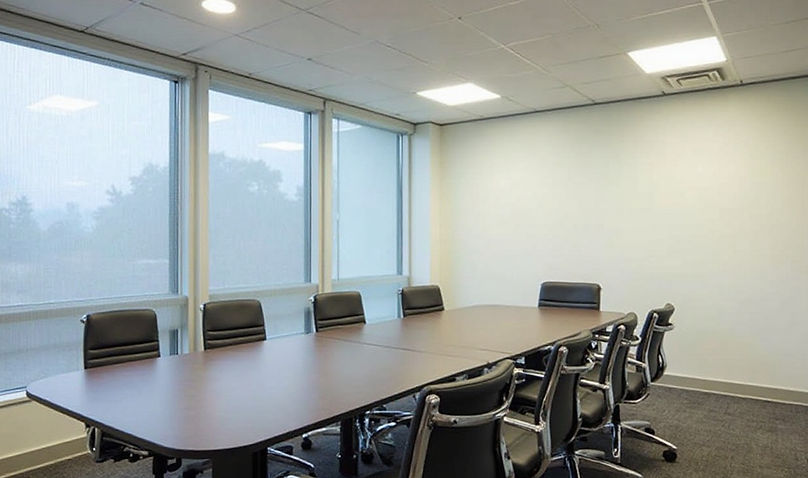
Frequently avoided pitfalls in Southern Indiana installs
Local field conditions can complicate clean performance if not handled early. Old gasket systems in historic Downtown Jeffersonville partitions sometimes leave small light leaks at the verticals that can reveal thin slivers of the display near the edge. Careful edge trims and, if needed, a narrow decorative sidelight band resolve those leaks. In some AP Business Park suites, glass doors swing into line with displays, which creates reflections the cloaking does not block. A minor display reorientation during the walkthrough prevents that artifact. In suites with very high traffic, fingerprints and smudges can impact perceived clarity. The hardcoat on Casper film is durable, and a simple maintenance plan keeps the glass clear without specialty cleaners.
Product lines and how they pair on a floor
Casper cloaking film is the screen privacy core. Decorative elements can use 3M Fasara, Avery Dennison frosted vinyl, or custom cut logo graphics that layer over specific zones. If a suite also deals with solar heat or glare on exterior glass, 3M Prestige Series or 3M Ceramic IR on the curtain wall solves that problem without darkening the glass too much. If a corridor calls for anti graffiti protection on public facing glass, 3M Anti Graffiti film provides a sacrificial layer. For suites requiring forced entry resistance at the lobby, 3M Safety and Security films handle that need. Those products do not affect the cloaking function when installed on different glass or on the proper layers. The specification is a stack that respects each film’s role.
What property managers measure after install
Managers at Gateway Office Park and River Ridge often track three outcomes. First, walk by legibility of screens drops to zero from the corridor. This is visible immediately. Second, occupants report that the room still feels open and bright. Daylight passes through, and people can make quick eye contact through the glass. Third, meeting turnover improves because staff cloaking window film Jeffersonville, Casper cloaking technology IN, River Ridge office privacy film, screen blackout window film can see that a room has wrapped up without opening the door. These outcomes support the open office model that Jeffersonville tenants want, while closing the data view path that compliance and security teams flag.
How scale affects staging in River Ridge, Downtown Jeffersonville, and Louisville towers
Large suites at 400 River Ridge Parkway and multi floor occupancies in Downtown Louisville schedule staged runs. Installers load in early, secure staging on a low impact path, and clear rooms in sets. The flexibility of interior film work lets tenants keep operations live. Access control badges, elevator reservations, and dock timing are arranged with property management, which shortens the live window in lobbies such as those at 300 Corporate Drive and along Main Street across the river. This is routine work in the Jeffersonville and Louisville corridor, with minimal disruption risk when crews plan with property teams.
Why the physics holds under daily use
LED displays produce light with specific polarization and wavelength peaks. The cloaking film’s micro louver and polarization structure aligns to block those peaks along the viewing axis from the corridor. People and objects do not emit polarized light in the same way. Ambient light in a room scatters and remains visible. That is why a passerby can see occupants and walls but cannot read the displayed spreadsheet. The film does not depend on software, power, or user action. It is an always on layer that operates by physics, which gives facilities teams confidence that the privacy it provides is consistent and not subject to user error.
Service area context and local fit
Cloaking window film in Jeffersonville IN sees active demand in 47130, 47131, and 47129, with frequent installs in 47150 in New Albany and along Veterans Parkway in Clarksville. Across the river, Downtown Louisville 40202, NuLu 40206, St. Matthews 40207, and Middletown 40223 firms run similar open office plans. Many companies span both sides of the Ohio River, commuting over the Big Four Bridge or the Lewis and Clark Bridge. They want consistent privacy standards at all locations. The same film and the same verification protocol carry across all sites, which keeps policy and training simple for security and compliance teams.
Final specification notes for architects and GCs
Include Casper cloaking film as an interior applied architectural film on glass partitions for selective display privacy. Note that verification of tenant display compatibility occurs during submittals and onsite mockup. Coordinate decorative banding locations to preserve full height cloaking in the display zone. Coordinate with any storefront or logo graphics to maintain a clean edge and avoid light leaks. If a suite needs integrated solar control on perimeter glass, specify spectrally selective films with high visible light transmission such as 3M Prestige to keep daylight and views consistent with the interior feel of Casper protected rooms. For safety glazing references, retain the base glass certification because the film layer does not convert non safety glass to safety glass on its own. For facility managers in Jeffersonville, include the sample verification in the scope so that procurement has a clear acceptance test that matches the onsite walk test used during sales.
Why Jeffersonville decision makers call Sun Tint
Decision makers want a local partner that understands how River Ridge offices run and how Downtown Jeffersonville suites fill each day. They want a team that speaks to HIPAA, SOC 2, and practical fit on the actual glass systems used in Gateway Office Park and Quartermaster Station. They also want clear pricing and a fast answer on whether their screens will cloak. That combination makes adoption simple. It shortens the path from risk identified to risk closed.
Request a verification walkthrough and pricing
Sun Tint serves Jeffersonville, Clark County, Floyd County, and the broader Louisville metro from 2209 Dutch Ln, Jeffersonville, IN 47130. The team operates seven days a week from 7:00 AM to 8:00 PM. A technician will visit the site, run the sample screen verification protocol in each room, confirm compatibility with 40 inch and larger LED displays, map glass dimensions, and provide a written scope with firm pricing. Cloaking film projects in Southern Indiana typically run 25 to 45 dollars per square foot installed, with most single rooms landing between 3,000 and 8,000 dollars. That quote aligns with current 2026 market conditions in Jeffersonville and Louisville.
Sun Tint operates as a 3M Authorized Dealer and 3M Prestige Certified Installer, an Authorized Casper Cloaking Film Installer through Designtex and Decorative Films LLC distribution, and an International Window Film Association member. The company is a licensed Indiana contractor with commercial insurance and a factory trained installation team. Manufacturer backed warranties are available, including up to 15 year commercial film warranties on qualifying lines, and a workmanship warranty on installation labor.
To schedule a site walkthrough for cloaking window film in Jeffersonville IN at River Ridge Commerce Center, Gateway Office Park, Downtown Jeffersonville, or anywhere across Clark County, Floyd County, and the Louisville metro, call +1-812-590-1147 or request service at https://www.sun-tint.com/cloaking-window-film-jeffersonville. Google Business listing is available for directions and reviews. Free onsite verification and consultation for commercial properties.
Sun Tint
2209 Dutch Ln
Jeffersonville,
IN
47130
Phone: (812) 590-1147
Official Website: sun-tint.com/jeffersonville-in